A Fragrance’s Opening Is Not the Whole Story: Test It on Paper, Skin and Fabric
A striking opening is easy to mistake for a fragrance’s entire character, even though an hour later it may wear quite differently beside you. A considered test helps separate instant attraction from everyday comfort.
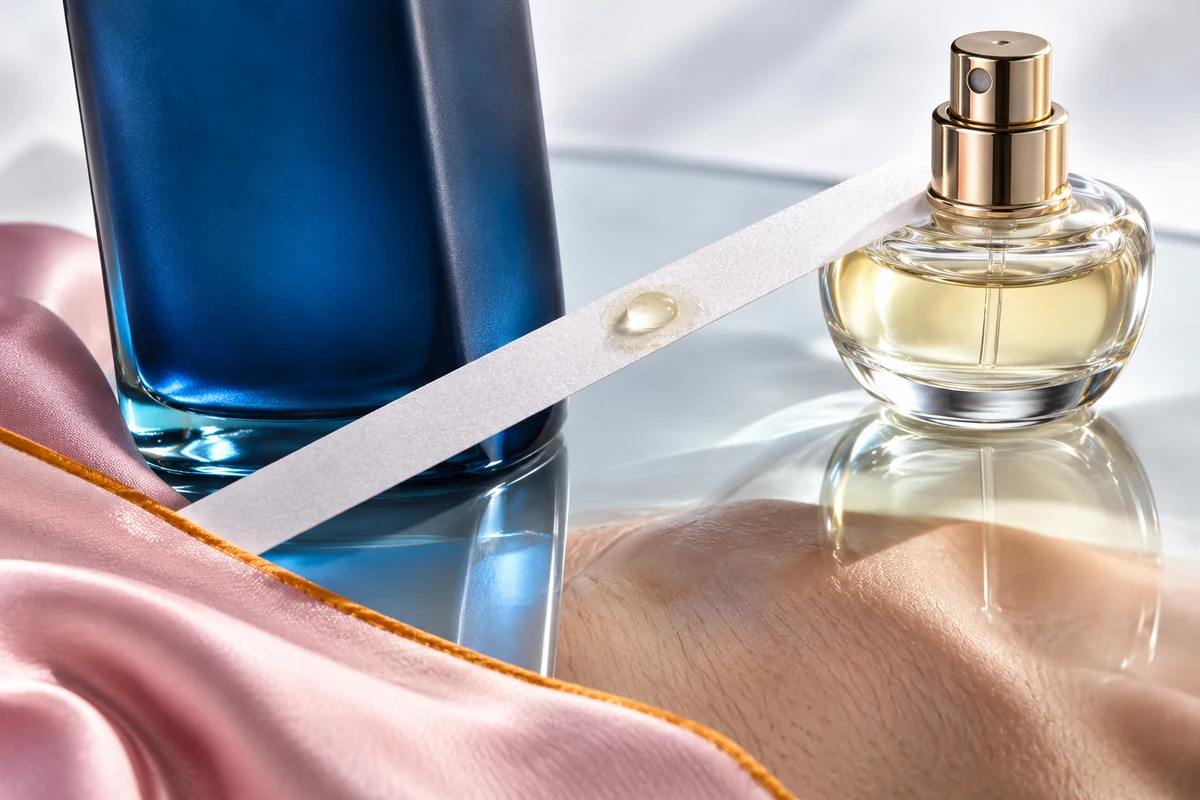
Citrus, berries or the sensation of cold air can be captivating from the first seconds. But after purchase, a fragrance will live alongside your skin and the collar of a favourite coat, so testing it on three surfaces matters more than making extra sprays at the counter.
1. A blotter helps narrow the list
Label the strip straight away: after half an hour, even familiar compositions can start to blur together. Apply one spray, wait a few minutes for the alcohol flash and the most volatile notes to fade, then return to the fragrance.
Do not stop at a simple “like it or not.” Instead, notice what holds your attention: transparent citrus, dry woods, clean musk or a sweet accord. Smell the blotter again after 20–30 minutes. If the scent is already tiring on paper, skin will not necessarily change that impression.
Paper conveys the character of the formula, but it cannot show how comfortable it will feel to wear. At this point, it is enough to keep one or two candidates rather than trying to choose a winner immediately.
2. Skin reveals how the composition develops
Choose one finalist for the day. If you still need to compare, apply a second fragrance to the other arm, leaving space between the application points. Do not press your nose to your wrist: at that distance, individual details become louder and the overall shape is lost.
Return to the composition after an hour, then again just before it nearly disappears. Watch for three things: whether the scent’s constant presence becomes irritating, whether you enjoy its movement from opening to heart, and whether there is a base note you would not want to live with all day. Skin, temperature, skincare and normal wearing distance all affect the impression, so a fragrance unfolds differently on different people.
If itching, redness, burning or swelling occurs, it is best to postpone the purchase. Wash the product off and do not apply it again; seek advice from a dermatologist if the reaction is severe or recurring. A day spent testing a fragrance is not a substitute for medical allergy diagnosis.
3. Clothing brings the fragrance back into real life
On fabric, a composition can sometimes last longer and smell more even than it does on skin. The opposite can also happen: the liveliness that appealed at first disappears. The difference is especially noticeable with musky, woody, amber and sweet fragrances—near a scarf, collar or lining, they enter your personal space.
For this test, choose an item you would not mind washing. Spray the fragrance onto an inconspicuous inner area. Do not experiment with silk, cashmere, leather or garments with delicate trim: fragrance can leave a mark, and these materials may require special care.
Wait for the fabric to dry. Assess the scent after several hours, when you are about to wear the item, or the following day. Here, the more useful question is not “Does it last?” but “Do I want to meet it again?” A scent that feels alien, overly sweet or out of place in your usual rhythm is a sound reason not to rush into buying a bottle.
Deciding after three stages
A good candidate remains interesting on a blotter, comfortable on skin and natural beside your clothes. If one stage leaves you uncertain, take a day or two and repeat the test with the same sample. Nose fatigue, weather or surrounding scents may have influenced the first impression.
Three surfaces do not turn the choice into an exact calculation, but they help prevent you from buying a fragrance for one vivid opening alone. The right bottle settles into your life without requiring you to keep persuading yourself of its virtues.

Share this story
Discussion
0 commentsComments use your ULNAY account.
Sign in to comment
It is quiet here. Start the conversation.