The Bottle Is Empty, but You Don’t Want the Same Fragrance Again
It can happen even with a beautiful composition you wore with pleasure. Choosing not to replace it does not erase the good experience; it can reveal how your tastes and your life have changed.
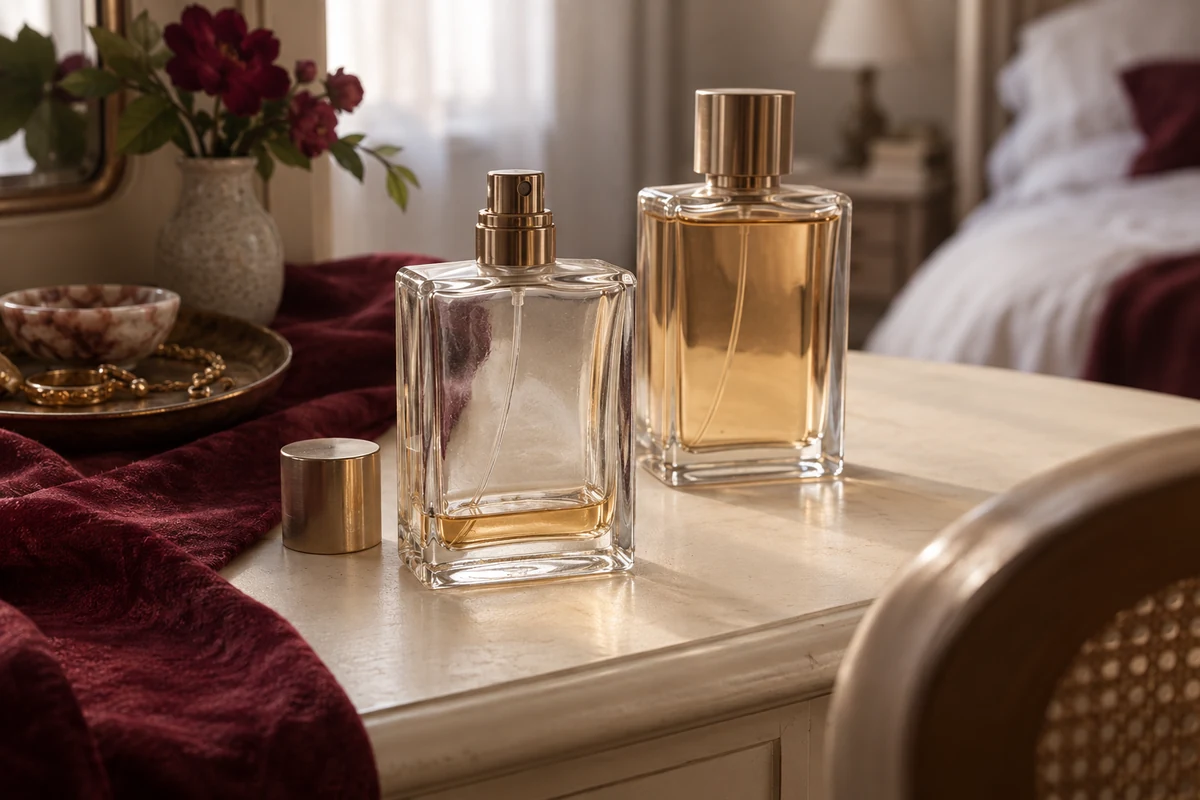
Standing at the fragrance counter, you may feel an awkward hesitation: the scent was good, yet you have no desire to put that familiar box in your basket. Nothing has gone wrong. A successful fragrance can be the perfect companion for one period of your life without becoming a lifelong signature.
Like a book after its final page, it has already said what mattered. You may return to it later, but there is no need to continue the story straight away.
The Nose Craves Change
With prolonged or repeated exposure, the perceived intensity of a smell decreases. Olfactory adaptation and habituation both play a part: a familiar composition seems quieter even though nothing in the bottle has changed. A constant signal gradually recedes into the background, while changes in the environment attract more attention.
So wanting something new does not necessarily mean you have stopped liking your old fragrance. Sometimes what has disappeared is simply the sense of discovery—the contrast with everything that came before that first encounter.
A similar mechanism operates in consumption: a repeated choice can gradually lose its freshness even when its quality still satisfies us. Fragrance is especially conducive to variety because it can change the tone of a day and does not have to perform a single practical task.
Sometimes a Fragrance Completes a Season
Scents are closely tied to personal episodes. One bottle can absorb a new job, a move, a winter of long walks or a period when you wanted to feel more composed. Once life changes, returning to it may be neither painful nor unpleasant—it simply no longer feels relevant.
A second bottle can then become an attempt to recreate a former version of yourself along with the composition. That state is unlikely to return exactly. It helps to ask whether you want the scent itself now or the period associated with it. The answer makes it easier to choose between a replacement bottle and a new direction.
Every Bottle Has Its Own Role
Some fragrances fit one particular scene perfectly: a rainy evening, a white shirt, a trip to the sea, the theatre or a working day. Outside that setting, the desire to wear them disappears. This is a sign of a precise character; universality is not essential.
Before buying another bottle, it helps to separate three questions.
| Question | What the Answer Reveals |
|---|---|
| What do I miss: the notes or the memory? | Whether I need the same fragrance now |
| On what kind of days do I imagine wearing it? | Whether it still has a place in my present life |
| Do I want to make my way through another full bottle? | The difference between affection and a genuine wish to repeat the experience |
If your answers point to a rare occasion, a travel size or decant may make more sense—or you can leave the fragrance in your memory until the right season returns. If you can easily imagine wearing it on an ordinary Tuesday, another bottle has a firmer basis.
Do Not Confuse ‘I Can’t Smell It’ with ‘I Don’t Love It’
Habituation can sometimes prompt a hasty replacement. Your own fragrance becomes less noticeable, so you feel drawn to something louder. But increasing the intensity and buying another bottle in the hope of restoring your first impression are solutions to different problems.
Give your nose a break and return to the composition on another day, without applying it repeatedly. Coffee beans in a shop are not a reliable reset button: in one experiment, they helped people identify scents no better than lemon or ordinary air. A short pause and a neutral environment offer a more honest indication of whether the fragrance itself still interests you.
Buying It Again Is Not a Test of Loyalty
A fragrance wardrobe does not have to consist entirely of lifelong favourites. It can hold anchor scents that you revisit for years and guest scents—vivid, perfectly suited to their moment and complete in themselves. The latter are valuable too: they broaden your taste and leave a distinct association without becoming an obligation.
As the bottle nears its end, wait until you have left the shop before deciding. Write down in a few words what felt truly yours in it: dry iris, cool citrus, soft woods, a sense of order or evening light. Then compare that note with what you actually miss, rather than with the advertising copy for a new candidate.
Respect for a past choice is a weak reason to make another purchase. A second bottle makes sense when you clearly want to live alongside that fragrance again. If you do not, the story still ended well: a good scent remains a good scent; its time has simply passed.

Share this story
Discussion
0 commentsComments use your ULNAY account.
Sign in to comment
It is quiet here. Start the conversation.