DS & Durga Turns a Carrion-Scented Bloom into a Green Fragrance
DS & Durga has released the limited-edition Resurrected Corpse Flower: Studio Juice recasts the image of the rare ‘corpse flower’ as a green floral fragrance shadowed by damp woods.
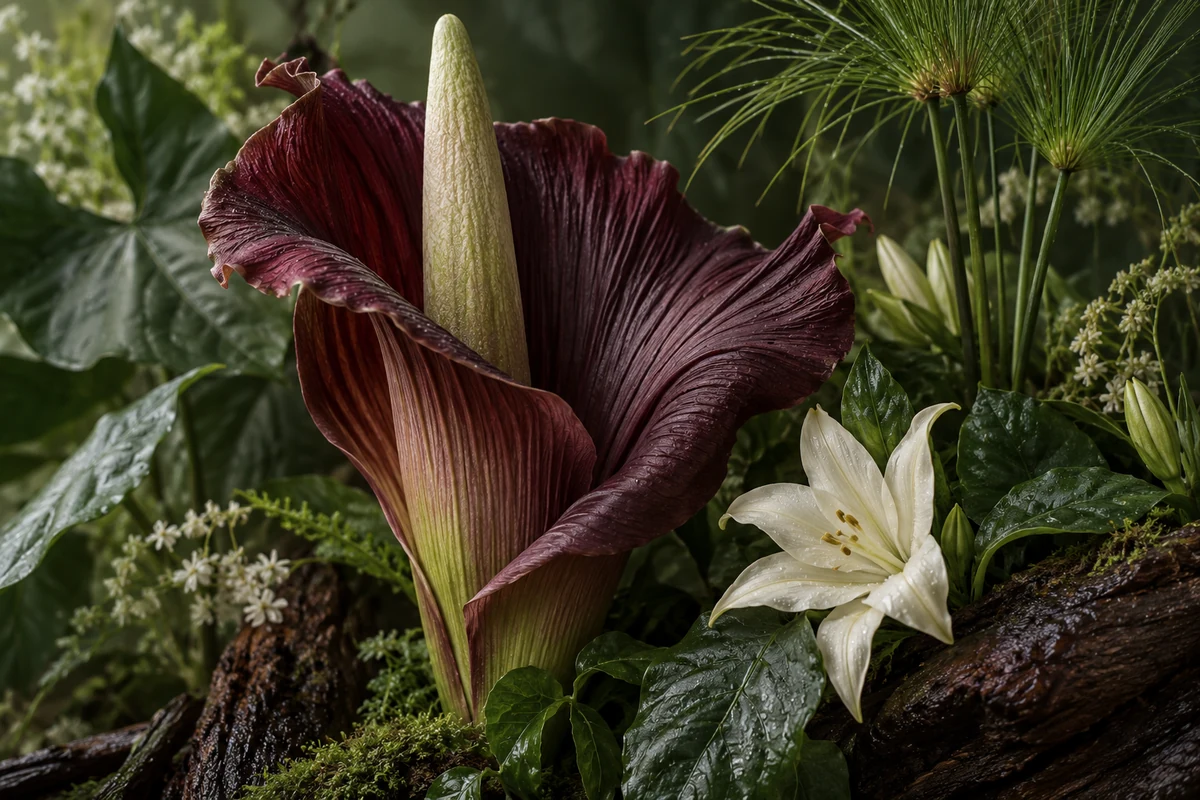
When a rare plant blooms for only a few days, its scent becomes an event in itself. DS & Durga has taken this awkwardly unperfume-like image and turned it not into a spectacle, but into Resurrected Corpse Flower, a limited-edition fragrance.
From botanic garden to bottle
The starting point was Amorphophallus gigas, which flowered at the Brooklyn Botanic Garden in January 2025. The plant is called a corpse flower for its carrion-like smell, and the garden noted that the species is rare in cultivation. David Seth Moltz, the perfumer and brand co-founder, saw the bloom in person and later transformed the impression into another release in his experimental Studio Juice series.
Resurrected Corpse Flower is presented as a limited-edition eau de parfum. Rather than literally recreating the smell of decay, the brand sets green, white-floral and damp woody facets against one another. That distinction matters: the provocative name establishes a story, rather than promising a botanical museum specimen on the skin.
What the scent is built from
The top notes include green olive, Balm of Gilead and grapefruit. At the centre are freesia, Madonna lily and tuberose absolute; the base combines green banana, swamp cedar and papyrus. DS & Durga itself describes the direction as ‘half swamp, half flower.’
This pyramid helps explain why the corpse-flower theme is more than a gothic gesture. Olive and grapefruit suggest salty greenery, white flowers bring density, while cedar and papyrus pull the composition away from the familiar cleanliness of a bouquet. Green banana adds a vegetal, slightly unripe nuance rather than dessert-like sweetness.
Why this botanical story suits niche perfumery
For DS & Durga, perfume has long been a way to tell a story through a material, a place or a cultural image. What is unusual about Resurrected Corpse Flower is the move itself: a bloom known for smelling unpleasant is reimagined as a composition of contrasts, between humidity and freshness, floral abundance and dark vegetation.
The release is a reminder that a botanical theme in niche perfumery does not have to mean a realistic garden. Sometimes it is more compelling to take a recognisable fact of nature, retain its character and change the way it is read. Moltz said he wanted to turn the flower’s unpleasant side into something beautiful; the listed notes show the means he uses to do so.
Its limited-edition status gives the launch a collector’s context, but does not remove the usual need for care before buying. Based on the notes, Resurrected Corpse Flower may appeal to those drawn to green white florals, damp woods and unusual natural narratives, rather than anyone expecting an accurate corpse-flower smell. Before ordering, it is sensible to check availability with official retailers and try the fragrance first, if possible.
Resurrected Corpse Flower does the most interesting thing with its source image: it keeps its strangeness but removes the literalness. For the brand, it is another story of how a rare bloom can continue in perfume form—more wearable, yet still faintly unsettling.

Share this story
Discussion
0 commentsComments use your ULNAY account.
Sign in to comment
It is quiet here. Start the conversation.