Mango, Guava, Passion Fruit: How to Carry Tropical Perfume into Autumn
In 2026, fruity fragrances have become juicier and more complex, with sweetness increasingly balanced by green notes, spices, woods and leather. We explore which tropical compositions can move beyond the holiday wardrobe.
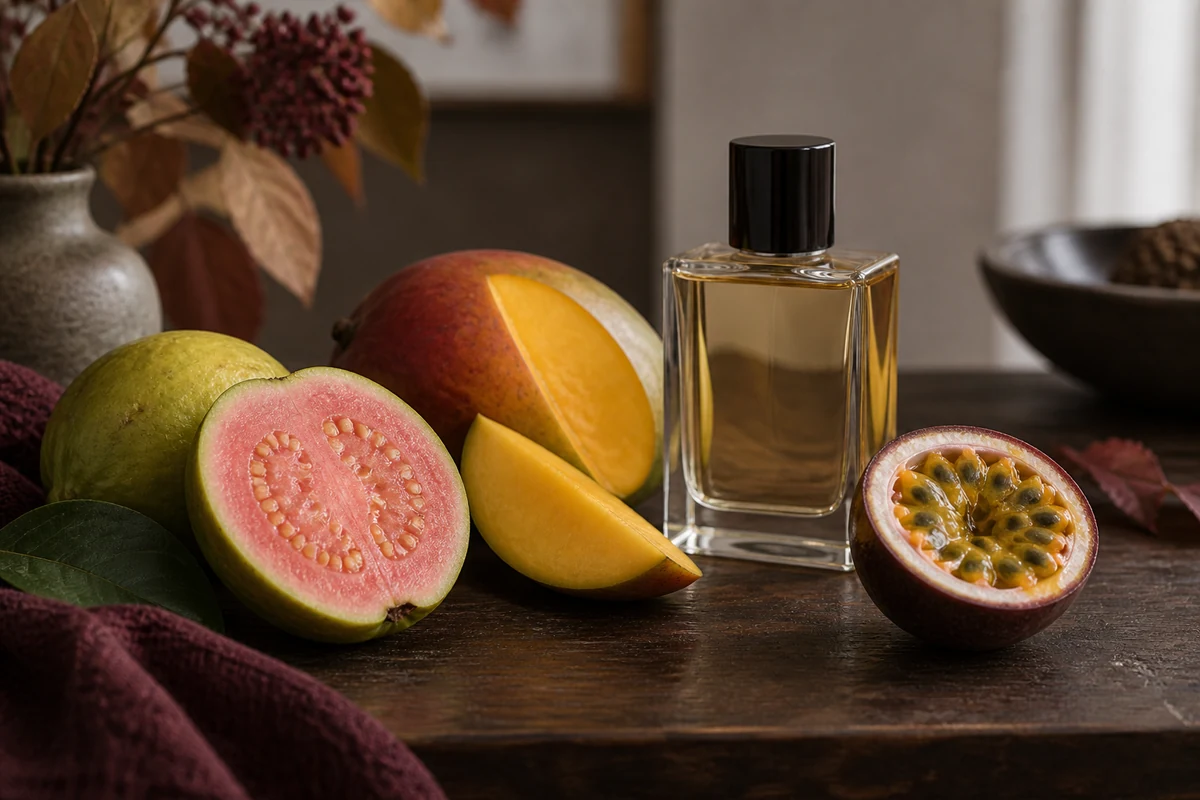
The morning already calls for a jacket, yet your wrist still smells of ripe mango. The contrast does not have to feel accidental. In autumn air, a fruity fragrance simply stops being a postcard from the beach—and reveals how it is constructed.
Fruit Is Only the Beginning
Tropical notes have a noticeable presence among the perfume launches of 2026. Perfumers and industry experts speak less of a return to familiar sugary cocktails than of juicier, tarter, greener and more sensual interpretations of mango, guava and passion fruit.
A fruit named in the fragrance pyramid does not mean that its essence is inside the bottle. Most such scents are created as accords: several aromatic materials combine to suggest flesh, peel, juice or unripe greenery. Two mango fragrances can therefore be as different as a silk shirt and a leather jacket.
In autumn, the character of the accord is what matters. A sheer fruit paired with citrus and aquatic notes will usually retain its summery lightness. Pepper, ginger, saffron, patchouli, dry woods or leather add shadow, allowing the composition to sit naturally alongside heavier clothing and early dusk.
Mango: Softness with a Sharp Edge
Mango is easy to imagine as dense, honeyed and almost creamy. In perfume, it can take another form—green, peppery and slightly astringent, with the sensation of freshly cut peel. This kind of mango moves more easily into an urban autumn: it needs neither coconut nor a marine accord, and certainly not constant sunshine.
In Mango Skin by Vilhelm Parfumerie, the fruit appears alongside blackberry and black pepper. Iris, lotus and jasmine follow, while patchouli, vanilla and pink sugar remain in the base. The sweetness does not disappear, but the pepper and earthy character of patchouli keep it from turning into a uniform syrup.
When choosing a mango fragrance, it is more useful to look for contrast than for the promise of a “juicy tropical paradise.” Green leaves make mango drier, spices give it definition, sandalwood softens it, and dark woods move the composition from daytime into evening. Vanilla does not prevent a fragrance from feeling autumnal—the question is how much air remains around it.
Guava: Between Greenery and Dessert
Guava is less familiar to many fragrance buyers, and that is part of its appeal. It can suggest pink flesh, crisp greenery or tart fruit preserve without calling up overly literal associations with juice and sweets.
Tropical by Arquiste builds its guava theme around lime, fresh ginger and white flowers. Champaca, jasmine and guava blossom emerge in the heart, followed by an accord of guava paste, Mexican vanilla, woody amber and mahogany in the base. The opening is vivid, but the woods and spicy greenery keep the fragrance poised and grown-up.
Guava Granita by Ellis Brooklyn sits at the opposite end of the spectrum. Alongside guava juice, its listed notes include banana, melon, coconut palm, vanilla, sandalwood and almond milk. It is a creamy gourmand composition that can feel comforting in cooler weather—provided the milky sweetness remains appealing after several hours, rather than only during the dramatic opening.
Guava is especially good at exposing the limitations of a fragrance pyramid as a buying guide. A list of notes suggests a direction, but it cannot tell you which one will speak loudest on your skin. A fruity sample is best assessed after the first cloud has faded: the composition’s autumnal character usually emerges in the base.
Passion Fruit: Tartness, Flowers or Dark Woods
Passion fruit, also known as maracujá, usually brings a vivid impression of juice and pronounced tartness. Paired with white flowers and vanilla, it becomes softer without losing its spark. This is the structure of Power of You by Emporio Armani: the fruity accord gives way to frangipani and a warm vanilla base.
The same fruit behaves very differently in Oud Maracujá by Maison Crivelli. Here, passion fruit is surrounded by saffron, Turkish rose, oud, benzoin, labdanum, leather, patchouli and vanilla. A bright, juicy accent collides with dense woods, and the holiday mood quickly gives way to a smoky, full-bodied trail.
This example shows why a fragrance’s season cannot be determined by a single top note. Passion fruit may remain a brief flash while leather, resins and woods tell the main story. Such a composition may feel too assertive for the office, but in the evening its contrast can be more compelling than a conventional fruity gourmand.
What Truly Belongs in an Autumn Wardrobe
A successful transitional fragrance relies on balance rather than weight. Mango benefits from pepper and greenery; guava from ginger, flowers and dry woods; passion fruit from saffron, patchouli or restrained vanilla. These pairings do not conceal the fruit—they change the light around it.
Before committing to a full bottle, spend some time with a sample in the course of an ordinary day. The first few minutes reveal the juiciness; several hours later, it becomes clear whether anything remains beside the sugar. The base matters most: it is the part that will accompany a coat, a scarf and a warm room after the cold outdoors.
A tropical perfume does not have to be packed away with the beach bag. The compositions that endure best in autumn are those in which fruit stops impersonating a holiday and becomes an expressive detail—vivid, but no longer carefree.
Scents in this story
Mentioned in the story · ULNAY encyclopedia data
 Vilhelm ParfumerieLondon Funk
London Funk opens with the cool clarity of bergamot and juniper, animated by basil and cardamom. Currant leaf and bud reinforce its green profile, while driftwood leads into vetiver, mate, cedar, ambergris and sandalwood. The result is aromatic and woody, with fresh spice and an earthy undertone rather than an aquatic effect.
Open in encyclopedia Vilhelm ParfumerieBlack Citrus
Black Citrus sets bright bergamot against the cool spice of cardamom, then lets mate and violet soften the turn toward birch and patchouli. What begins with citrus clarity grows drier, woodier and more shadowed, with smoke and leather providing contrast rather than weight. The result feels crisp, composed and distinctly modern.
Open in encyclopedia FreshCannabis Santal
Cannabis Santal begins with ripe plum lit by bergamot and orange. Patchouli and cannabis then introduce an aromatic, earthy green tension, with rose set quietly within the heart. Dark chocolate, vanilla, vetiver and musk deepen the composition into something warm, woody and softly sweet, giving the fragrance a distinctive masculine character.
Open in encyclopedia Maison CrivelliSantal VolcaniqueOpen in encyclopedia
Share this story
Discussion
0 commentsComments use your ULNAY account.
Sign in to comment
It is quiet here. Start the conversation.