Wet Stone in a Bottle: How to Read a Mineral Fragrance Description
Mineral fragrances have no single formula: one word can evoke rain, salt, metal, dry dust or cool wood. Learning to distinguish these directions makes it easier to choose a sample—without expecting the literal smell of stone.
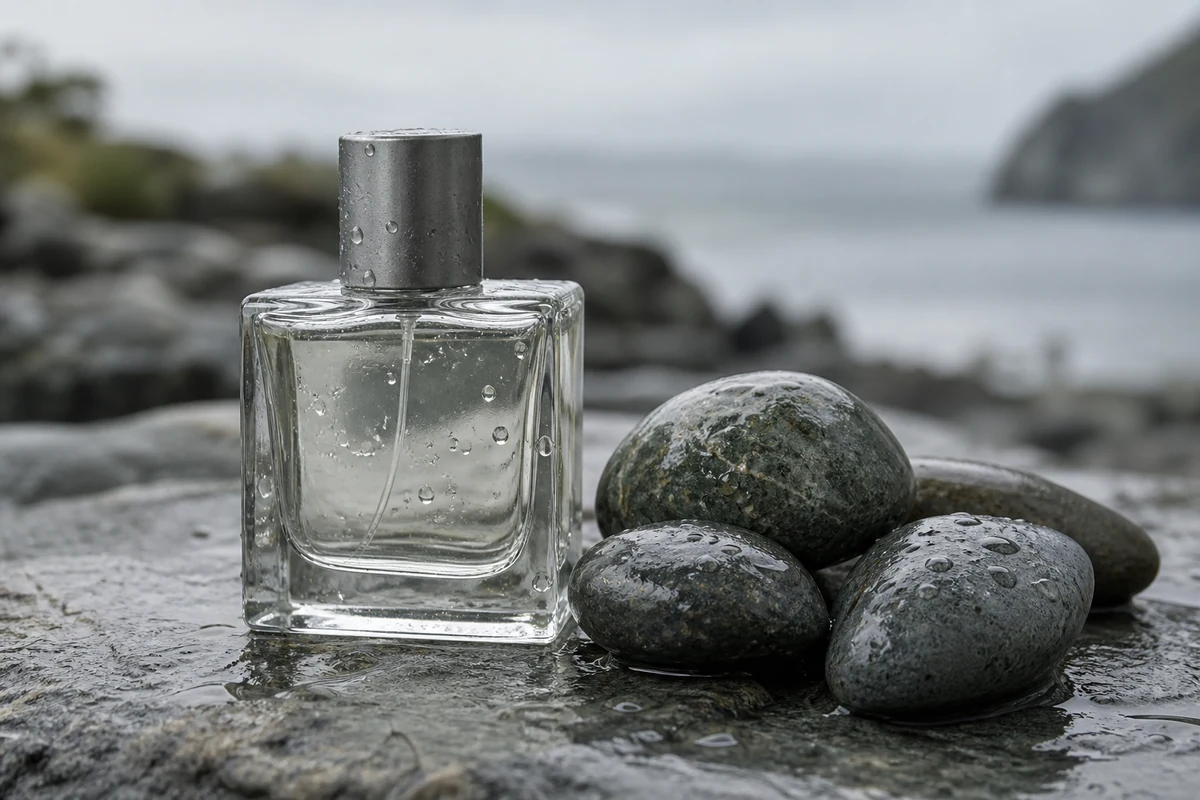
Rain-soaked pavement smells remarkably vivid, even though water and granite are almost odourless in themselves. The air carries volatile substances from soil and plants, while the imagination gathers them into a familiar scene: rain, a cold surface, a damp garden.
Something similar happens in perfumery. “Minerality” is neither a required ingredient nor a distinct note with one fixed scent, but an image created by combining several effects. That is why two bottles described with the same word on their brands’ websites may smell nothing alike.
Does Stone Actually Smell?
The scent commonly associated with earth after rain is more precisely described as petrichor. The term appeared in scientific literature in 1964, when researchers studied aromatic substances that accumulate on dry soil and rocky surfaces before being released by moisture. Scientists later showed how raindrops striking porous ground send tiny aerosols into the air.
One source of this earthy character is geosmin, a volatile compound of microbial origin to which the human sense of smell is exceptionally sensitive. But petrichor involves more than a single compound: plant-derived substances and the entire rain-soaked environment can contribute to it. For a perfumer, recreating the impression of the scene matters more than reproducing its chemistry exactly.
Four Dialects of Minerality
We compared the language used by four fragrance houses with the notes they list. Even without a literal “stone” note, the direction of each composition becomes clearer.
| Fragrance | What the description promises | What the listed notes suggest |
|---|---|---|
| Le Labo Baie 19 | Earth soaked after a long drought | Dry juniper, green leaves and patchouli point towards a damp, earthy-green minerality |
| Hermès Eau des Merveilles Bleue | Salty pebbles by the sea | Juniper and patchouli appear in a more transparent, marine and woody setting |
| Marc-Antoine Barrois Ganymede | Fresh minerality and an almost metallic leather | Mandarin, immortelle and a leather accord suggest a luminous, saline and smooth effect |
| Aesop Karst | Coastal cliffs, mineral top notes and a stormy metallic backdrop | Juniper, aromatic herbs, cumin and dry woods create a cool, herbaceous landscape |
The contrast between Baie 19 and Eau des Merveilles Bleue is especially revealing. Both descriptions mention juniper and patchouli, yet the first fragrance moves towards wet earth and greenery, while the second evokes sea air and salty pebbles. The image comes not from one note, but from everything around it.
Ganymede offers a different construction. Here, minerality is paired with leather, citrus and immortelle, so “stone” is better understood as light, smoothness and metallic coolness. In Karst, the same word appears alongside a rocky shore, herbs and woods, producing a harsher, more vegetal scene.
Translating the Marketing Language
First, identify the noun that the word “mineral” describes. A mineral breeze, mineral leather, mineral pebbles and mineral top notes make four different promises. A breeze suggests airiness; leather, a smooth abstract texture; pebbles, salt and water. A note’s position in the fragrance pyramid indicates when the effect is meant to emerge.
Next, consider the surrounding words. Rain, leaves, moss and soil point towards damp greenery; sea, salt and seaweed towards coastal freshness; metal, ink and leather towards a cold, polished surface. Dust, chalk and limestone generally suggest dryness and a matte texture rather than a damp cellar.
A note list can clarify the direction, but it does not recount the scent word for word. Juniper may make a composition sharp and transparent, patchouli earthy and dark, citrus bright, and woods dry. The result depends on proportions and accords that a short note pyramid cannot reveal.
Why a Description Feels More Convincing Once You Have Read It
Smells are difficult to name precisely, so words quickly supply a ready-made scene. Research suggests that labels can change how people describe a scent and judge its pleasantness, although they do not necessarily make different smells easier to distinguish. “Wet stone” can direct attention towards coldness and dampness before the first inhale.
That does not make descriptions useless. They work best as a director’s cue: setting the light and scenery without replacing the encounter with the fragrance itself. The more specific the original language, the easier it becomes to decide whether the suggested association rings true for you.
For a simple test, smell the blotter before rereading the copy and write down a few plain impressions: damp or dry, salty or earthy, transparent or dense. Then return to the description. A match suggests that the image was chosen well; a mismatch reveals where the scent ends and the brand’s story begins.
Who Might Enjoy This Profile?
Minerality often appeals to people who want freshness without an obvious lemon note, sweetness or a familiar marine accord. It can feel composed and understated, but that does not make it entirely neutral: earthy geosmin, metallic leather and saline herbs provoke very different reactions.
So the word “mineral” is a reason to ask the description a precise question rather than buy blind: what kind of stone is this—wet, salty, dusty or polished? Once the metaphor is broken down into temperature, moisture and texture, it stops being a vague promise. What emerges from the bottle is not a mineral, but a persuasively constructed sense of place.

Share this story
Discussion
0 commentsComments use your ULNAY account.
Sign in to comment
It is quiet here. Start the conversation.