A New Bottle Smells Different. Is It a Fake—or Something Else?
A familiar fragrance in a new bottle can cause an almost immediate jolt of concern. Before looking for signs of a counterfeit, it helps to separate the factors that can create a very similar sense of change.
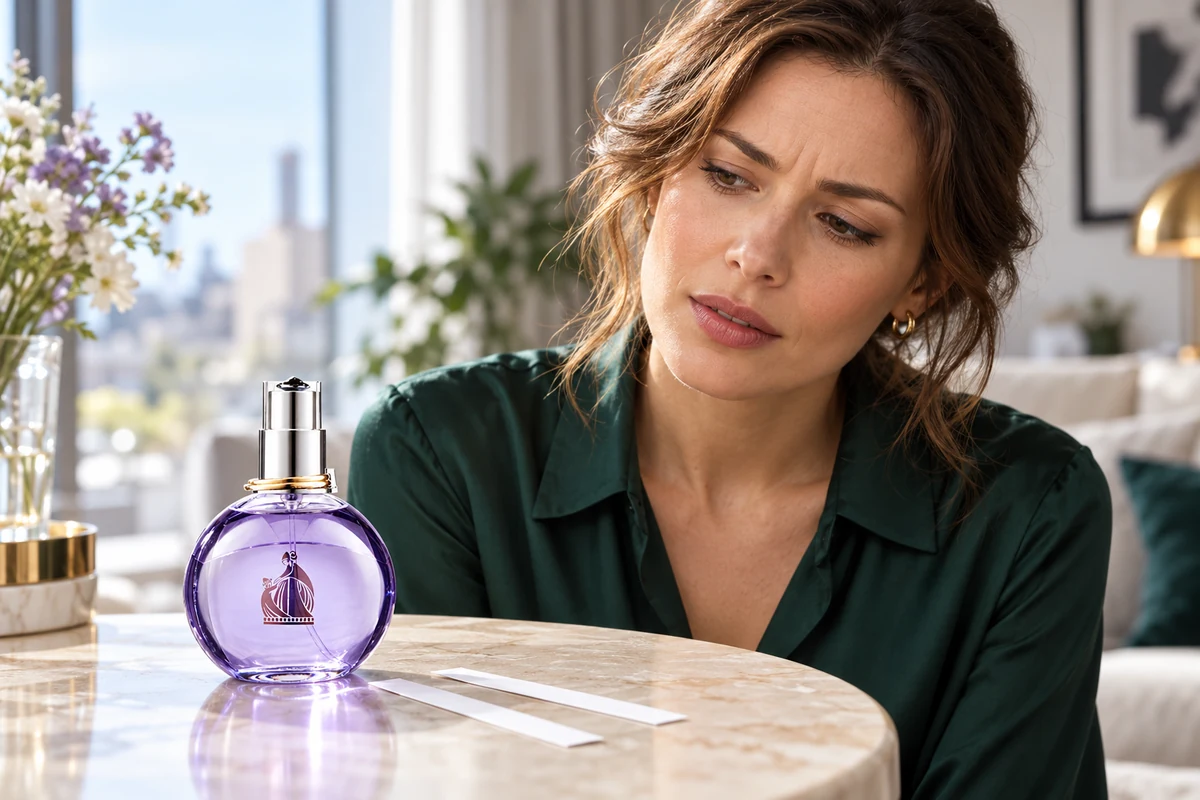
After unboxing it in the evening, you reach instinctively for a blotter strip—and suddenly, instead of the opening you expect, you smell something else: the citrus seems quieter, the woods drier, the sweetness denser. The suspicion is understandable, especially if the previous bottle was a favourite. But what you smell in the first few minutes says nothing, by itself, about where the purchase came from.
First, make sure you are comparing the same version
The most common trap begins with the name. A single line may include an Eau de Toilette, Eau de Parfum, parfum, extrait, Intense, Absolu, a limited edition, or a flanker with similar packaging. These are separate compositions or different interpretations of the original idea; the shared name can create a false impression that they should be identical.
Before comparing, check the full name, concentration, size, and markings on the box. The market matters too: an international brand’s range and packaging may differ from country to country. If the old bottle was a decant, another variable enters the picture—the storage history and the container itself. Only after this check does it make sense to discuss a difference in the fragrance itself.
The formula may have changed, and memory may have simplified the past
Perfume formulas often outlive advertising campaigns. A brand may update raw materials, revise a composition because of safety requirements or material availability, or change individual components while retaining the fragrance’s name and overall character. The result can be noticeable in the opening, or sometimes in the trail or base. Customers rarely see the full formula, so it is more honest to seek confirmation from the brand and compare information about specific versions than to assemble theories from forum photographs.
There is another side to the comparison. We rarely keep a fragrance in our memory as an exact recording: what remains is an image—“that transparent jasmine”, “warm vanilla”, “cool cedar”. Months later, we meet it again on a different day, in another season, after coffee, skincare, or several surrounding scents. The sense of smell quickly adapts to a constant stimulus, altering the subjective volume of familiar facets.
For a fairer test, it is better to apply the old and new samples to two clean blotter strips, label them, and return to them at intervals. Then compare both on matching areas of skin on a quiet day. Pay attention to how they develop over several hours, rather than only to the first seconds after spraying.
Storage changes a fragrance gradually
Light, heat, and air can affect cosmetic products and their scent. For fragrance, the bottle’s history is especially important: did it sit on a sunny shelf, endure heat in a car, or remain open for a long time? Sometimes an older bottle seems “right” precisely because it has changed slightly, while a new one reveals a fresher profile. The reverse is also possible if the new bottle experienced unfavourable conditions in transit or in storage.
One cold delivery evening or a short journey home does not, by itself, call for a ritual of waiting several weeks. After intense cold or heat, simply allow the bottle to return calmly to room temperature, then assess the fragrance under ordinary conditions. For continued storage, choose a cool place away from direct light and constant temperature swings.
What genuinely helps you work it out
It is best to approach the check from the simple to the more reliable. First, compare the version and concentration. Then give the fragrance one calm test on paper and skin, keeping weather, skincare, and olfactory fatigue in mind. After that, check the purchase documents, the seller’s reputation, and whether the information on the box and bottle matches. If serious doubts remain, contact the seller and the brand’s customer service with product photographs and order details.
A batch code is useful for tracing a production batch, but it is not, on its own, a certificate of authenticity: the code can appear on both genuine and questionable packaging. The colour of the liquid, sediment, and the first sprays also need context. They may suggest that a product deserves further investigation, but no single sign delivers a verdict.
A sharp unfamiliar smell, a noticeable colour change, foreign particles, damaged packaging, or skin irritation are reasons to stop using the product. In that situation, keep the receipt, box, and photographs, and contact the seller and manufacturer. A calm sequence of checks brings more clarity than an at-home assessment based on a single sign. A new bottle can sometimes be an invitation to discover a fragrance anew—and only sometimes leads to a justified complaint.

Share this story
Discussion
0 commentsComments use your ULNAY account.
Sign in to comment
It is quiet here. Start the conversation.