At ISES 2026, RIFM will show why real-life use matters for fragrance
The safety of a fragrance formula begins not only with its composition, but with how the product becomes part of everyday life.
Perfume in the morning, body gel after a shower, fragranced skincare at home. In safety assessment, what matters is not an ingredient’s abstract presence, but the possible combined exposure created by this real rhythm of use.
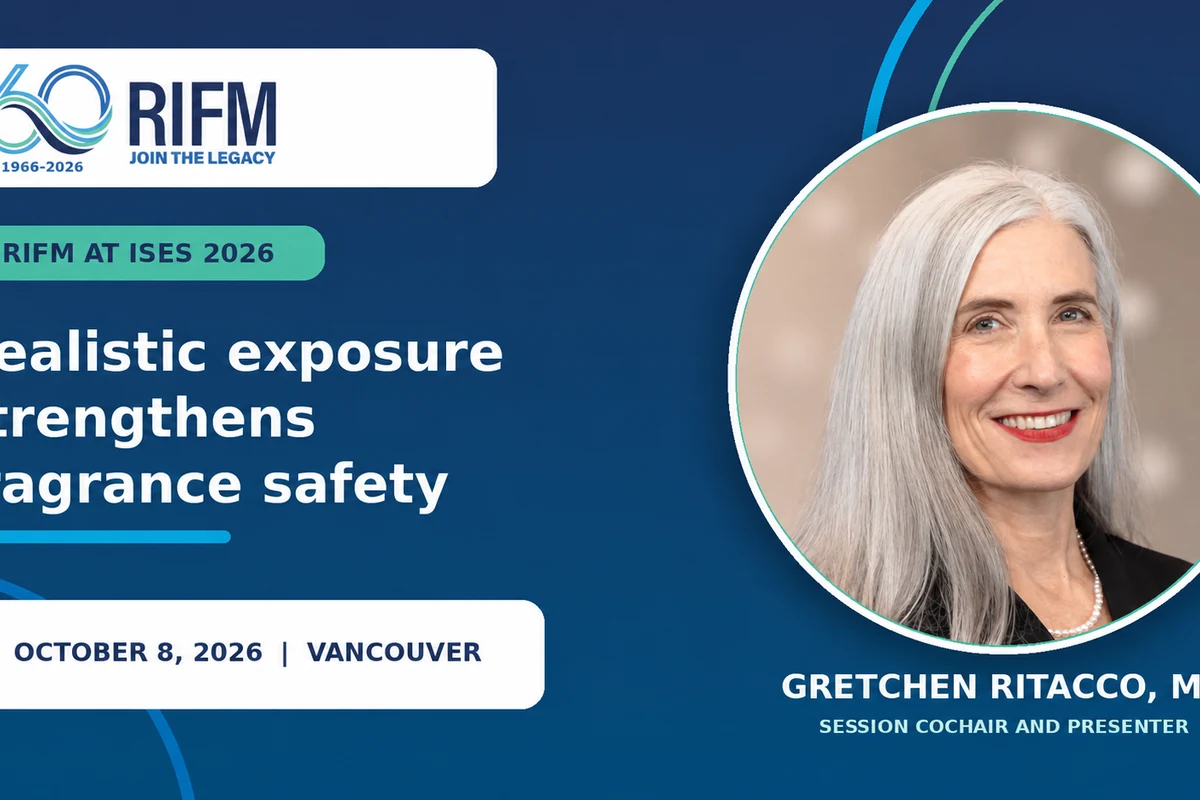
RIFM will address this subject at the annual meeting of the International Society of Exposure Science. ISES 2026 will take place in Vancouver from October 4 to 8; the institute will present its work on modelling realistic consumer exposure to fragrance materials.
Gretchen Ritacco, RIFM’s Manager of Scientific Operations & Exposure Modeling, is listed on the programme. She will co-chair a session and discuss approaches that connect data on the everyday use of fragranced products with their safety assessment.
For perfumery, this shifts the focus in an important way. A formula cannot be read as a list of substances in a vacuum: the same material may occur across different product categories, be used at different frequencies and reach the skin in varying amounts. Exposure models help bring that picture closer to consumers’ actual habits.
This approach does not replace toxicological research; it gives it context. It makes it possible to assess potential exposure according to how a product is used — whether it remains on the skin or is rinsed off, how often it is applied and which category it belongs to.
For collectors and fragrance lovers, this work usually remains beyond the shop counter. Yet it helps the industry make decisions about compositions before a scent reaches its bottle. At ISES, RIFM will not be discussing a new launch, but how fragrance science is learning to see the user’s ordinary day more precisely.

Share this story
Discussion
0 commentsComments use your ULNAY account.
Sign in to comment
It is quiet here. Start the conversation.