Vanilla with Smoke and Salt: How to Find Your Sweet Spot
In perfumery, vanilla can be creamy, woody, mineral, or barely sweet at all. The easiest way to discover which kind suits you is through contrasts, not a long list of notes.
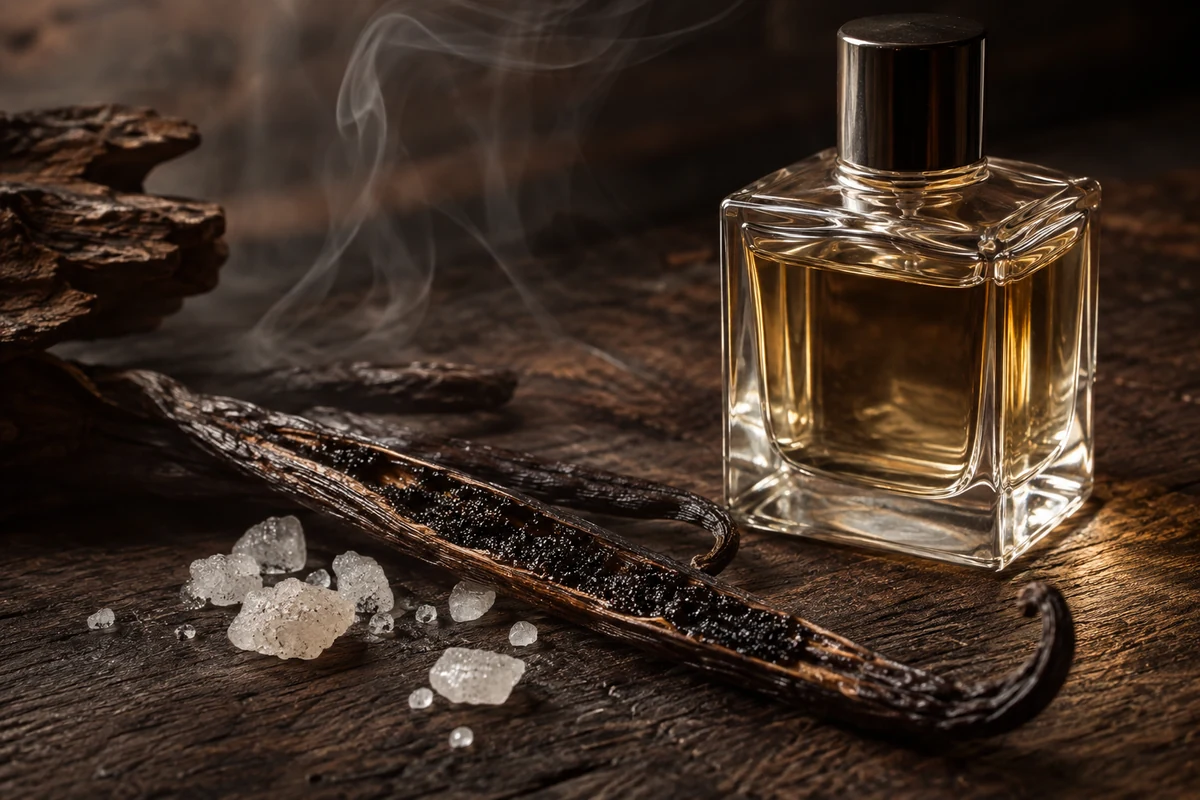
On a blotter, two vanilla fragrances may open almost identically, then head in opposite directions an hour later: one evokes cream, the other warm wood after rain. How do you choose between them when the word “vanilla” on the packaging says nothing about sweetness?
Vanillin does have a distinctive sweet, creamy scent, but a finished composition is never built from a single note. Woods make vanilla drier, resins darken it, spices add movement, and salty or mineral accords dispel the impression of dessert. The real goal is not to find a “good vanilla,” but the contrast that feels right to you.
A Map of Vanilla Styles
Creamy and Powdery
This is the softest end of the spectrum. Here, vanilla is supported by milky, almond, coconut, musky, or powdery nuances. The fragrance may recall warm custard, rice powder, or fabric that still holds the warmth of skin.
This kind of vanilla suits anyone looking for a calm, enveloping scent. Pairings with caramel, praline, or syrupy fruit can intensify the sweetness considerably, however, even when the composition seems airy in its opening minutes.
Spicy and Aromatic
Pepper, cardamom, ginger, lavender, and dried herbs give vanilla a sharper outline. A cool or tingling opening replaces pastry-like roundness, while the sweet base emerges gradually.
This is an inviting entry point for someone who enjoys vanilla’s warmth but does not want to smell like baked goods. Compositions in which the spices remain perceptible after an hour, rather than disappearing with the first volatile notes, are especially expressive.
Dry and Woody
Sandalwood smooths vanilla, cedar makes it more austere, and patchouli adds earthy depth. Oak and tobacco nuances can evoke wood shavings, an old keepsake box, or a dry leaf.
Woody vanilla is not necessarily quiet. It can feel denser than a creamy interpretation yet register as less sweet because of its dry texture. When reading a sample description, look beyond the word “vanilla” for woods, vetiver, patchouli, tobacco, or suede.
Smoky and Resinous
Incense, benzoin, labdanum, smoked wood, and leather accords draw vanilla into shadow. The smoke may be translucent, like a slender ribbon of incense, or dense, with the feel of charred wood and dark resin.
In small amounts, smoke restrains the sweetness and adds depth. At greater intensity, the composition becomes more demanding. It is worth testing not only in the evening but also during an ordinary day, when you can quickly tell whether that richness feels comfortable.
Salty and Mineral
A salty accord creates contrast. Beside it, vanilla may seem less sugary, more translucent, and cooler. Marine, amber, leather, or woody nuances can suggest salt on warm skin, damp air, or pale stone.
It helps to distinguish saltiness from conventional aquatic freshness. Salt brings out vanilla’s texture, while a pronounced marine accord may push it into the background. If you want vanilla with salt, the vanilla should remain perceptible in the later stages of the fragrance.
Amber and Liqueur-Laced
Rum, dried fruit, cocoa, balsams, and warm amber accords make vanilla rich and evening-ready. This does not always mean maximum sweetness: bitter cocoa, resins, or woods can keep the composition from becoming syrupy.
This profile deserves especially close attention after several hours. A boozy opening may soften into a comforting vanilla, while an innocent initial sweetness can develop into a dense amber trail.
How to Build a Sample Set
Four fragrances are enough for a first comparison: one creamy, one woody, one smoky, and one salty-mineral. Vanilla should play a noticeable role in each; otherwise, you will be comparing different genres rather than variations on a single note.
Avoid choosing four nearly identical gourmand fragrances. A contrasting set reveals your personal limits more quickly: how much milky softness you enjoy, whether you need a woody framework, whether smoke becomes tiring, and whether salt really makes vanilla feel lighter.
Treat marketing descriptions as coordinates, not ready-made answers. Words such as “dark,” “clean,” or “sensual” are too broad to tell you much. The accompanying notes are usually more revealing: caramel and praline set one expectation, incense and cypriol another, while oak, patchouli, and suede suggest a drier texture.
A Calm Way to Explore
On the first evening, apply all four fragrances only to labelled blotters. Compare their openings, then return to the strips about an hour later and again toward the end of the day. At this stage, it is easy to eliminate compositions that immediately seem cloying, excessively smoky, or short on vanilla itself.
Devote the following days to testing on skin: one sample per day, applied to the same spot, with no other perfume. Competing scents can blur distinctions, while several rich compositions worn at once quickly merge into a single background.
Your notes can be brief: “sweeter than I want,” “dry and calm,” “beautiful smoke, but tiring,” or “salt only noticeable at the start.” Record your impression again several hours later. The drydown often reveals whether a fragrance will remain appealing after its striking first impression.
Retest the finalists on days with different rhythms: wear one indoors and another on a walk. The aim is not to measure a fragrance with laboratory precision, but to experience it alongside your usual clothes, pace, and conversational distance.
Your Own Degree of Sweetness
It is more useful to assess vanilla along two independent axes than on a scale from “weak” to “strong.” The first is sweetness, ranging from dry wood to cream and caramel. The second is density, from a translucent mineral trail to a rich resinous base.
This explains why an assertive smoky fragrance can be almost unsweet, while a quiet powdery vanilla may feel thoroughly dessert-like. Salt creates a sense of air, wood brings dryness, and smoke adds shadow, but the final balance emerges only in the composition as a whole.
The right vanilla does not have to astonish you in its first minute. A fragrance you want to revisit in the evening and wear again the next day is far more valuable. When a sample holds up to that repetition, you no longer have to guess at its sweetness—it simply feels like your own.
Scents in this story
Mentioned in the story · ULNAY encyclopedia data


Share this story
Discussion
0 commentsComments use your ULNAY account.
Sign in to comment
It is quiet here. Start the conversation.