Extrait, Eau de Parfum or Eau de Toilette: which one really lasts longer?
The word Extrait does not automatically promise the longest-lasting trail, and an Eau de Toilette will not necessarily vanish by lunchtime. Longevity depends less on the title on the bottle than on how the formula is composed and performs.
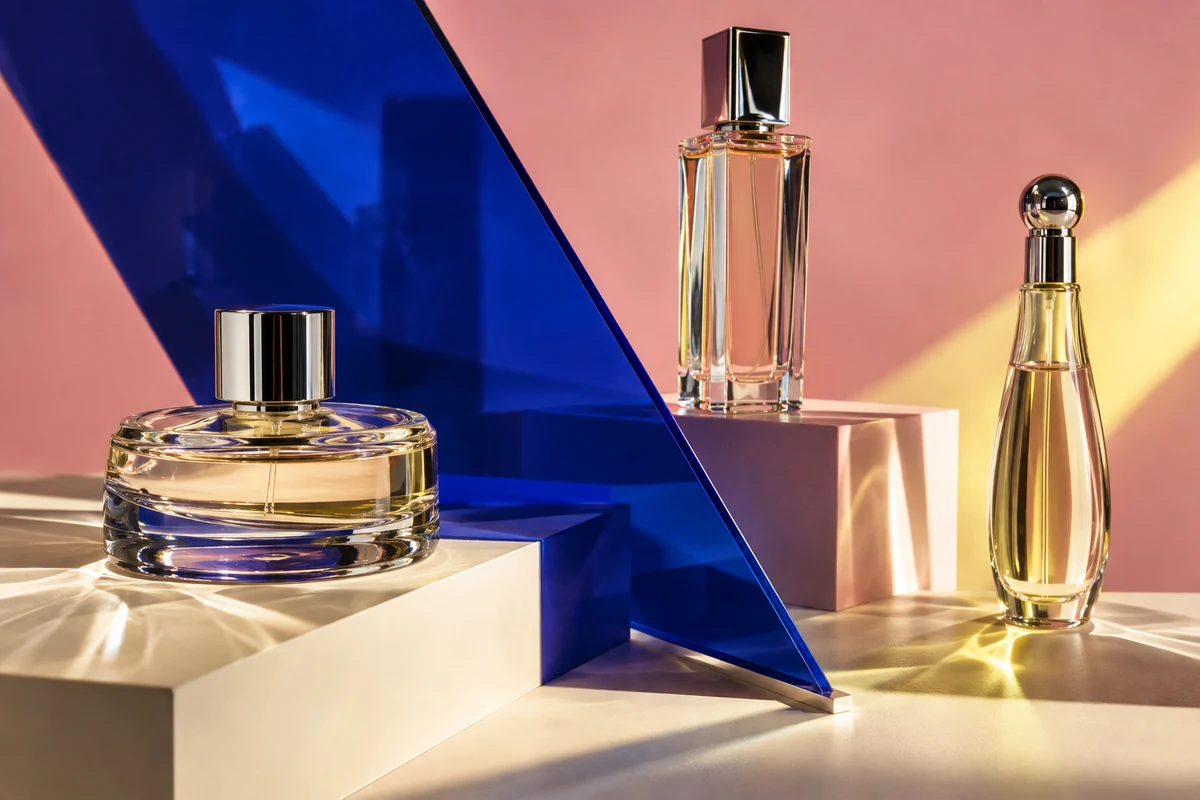
At a fragrance counter, it is easy to make the choice in seconds: the higher the concentration, the safer the purchase. In perfumery, that logic is only half right. Concentration indicates the share of fragrance compound in the finished liquid, but it does not reveal which materials it contains or how quickly they leave the skin.
What the names on the bottle mean
For alcohol-based fragrances, these concentration ranges are commonly used:
| Format | Typical fragrance-compound range |
|---|---|
| Eau de Toilette (EdT) | 5–15% |
| Eau de Parfum (EdP) | 10–20% |
| Extrait / perfume extract | 15–40% |
These are industry guidelines, not an international standard. One house may call a formula Eau de Parfum when another would place it closer to an extrait; naming is especially flexible across price segments and countries. Comparing two fragrances by the letters EdT and EdP alone is like judging a book by the thickness of its spine.
Concentration is not a stopwatch
Once sprayed, alcohol evaporates quickly, while the aromatic blend unfolds not all at once but through individual materials. Volatile citrus, green notes and some light floral molecules fade sooner. Resins, woods, musks, vanilla and amber accords usually remain perceptible for longer — though they, too, can be arranged into a sheer, quiet composition.
Put simply, a higher percentage of fragrance compound increases its presence in the liquid, but it does not alter the physical properties of each ingredient. Two extraits can behave in opposite ways: one may create a dense, long-lasting trail thanks to its base, while another stays soft and close to the skin because that is the perfumer’s intention. Conversely, a well-built Eau de Toilette with a persistent woody-musky foundation can outlast a more concentrated yet airy floral scent.
Longevity, sillage and volume are different things
They are often conflated, which leads to disappointment. Longevity is how long a fragrance can be detected on skin or fabric. Sillage is how noticeable it is to others at a distance. Its volume in the first few minutes is the strength of the opening, often linked to volatile top notes, and it does not predict the drydown.
An extrait is often perceived as smoother and more compact: its opening may be less sparkling, while its base sits closer to the skin. Eau de Toilette often begins more brightly and openly, especially in citrus and fougère styles. This is neither a rule of quality nor a competition between formats, but different ways of shaping an impression.
Why a fragrance changes on the skin
Evaporation is affected by skin temperature, air movement, humidity, the amount applied and the surface itself. Skin and fabric are not identical carriers: fibres can retain certain components longer, but a fragrance on clothing does not develop in the same way as it does on skin. Olfactory adaptation also matters: you may stop noticing a familiar scent on yourself while it remains detectable to someone else.
That is why a claim such as “12-hour longevity”, without conditions attached, is better understood as a marketing guide than a personal forecast. Scientific research into the evaporation of fragrance components supports the essential point: ingredients in a blend leave a surface at different rates, and their interactions reshape the way the scent unfolds.
How to choose the right format
Start by deciding which effect you want. For a crisp, lively opening and daytime freshness, look beyond EdT to the fragrance family itself: citrus, green or aquatic. For a slower, richer development, EdP and extrait often suit, particularly when the description points to woody, resinous, amber or musky foundations. But exceptions are far from rare.
In a shop, it is more useful to compare the development of specific versions of the same fragrance than to compare format names. Apply them separately, without layering, and return to them a few hours later. Notice three things: whether you enjoy the opening, whether the character remains at the heart, and whether the base feels comfortable once the scent has grown quieter. This reveals not an abstract “highest” longevity, but the format that genuinely suits your rhythm.
In brief
A higher concentration often creates a fuller impression, but it guarantees neither a long-lived fragrance nor a large trail. The format suggests an expected density; the answer to the question of longevity lies in the ingredients, the structure of the accord and the conditions of wear. Rather than choosing the top line in the hierarchy, choose the version whose path from first spray to quiet base remains interesting to you.

Share this story
Discussion
0 commentsComments use your ULNAY account.
Sign in to comment
It is quiet here. Start the conversation.