Osmo could preserve the scent of endangered plants, but that is not conservation yet
A digital scent record may become a memory of a plant that is steadily disappearing. But rebuilding its aroma in a laboratory neither restores its habitat nor removes demand for natural materials.
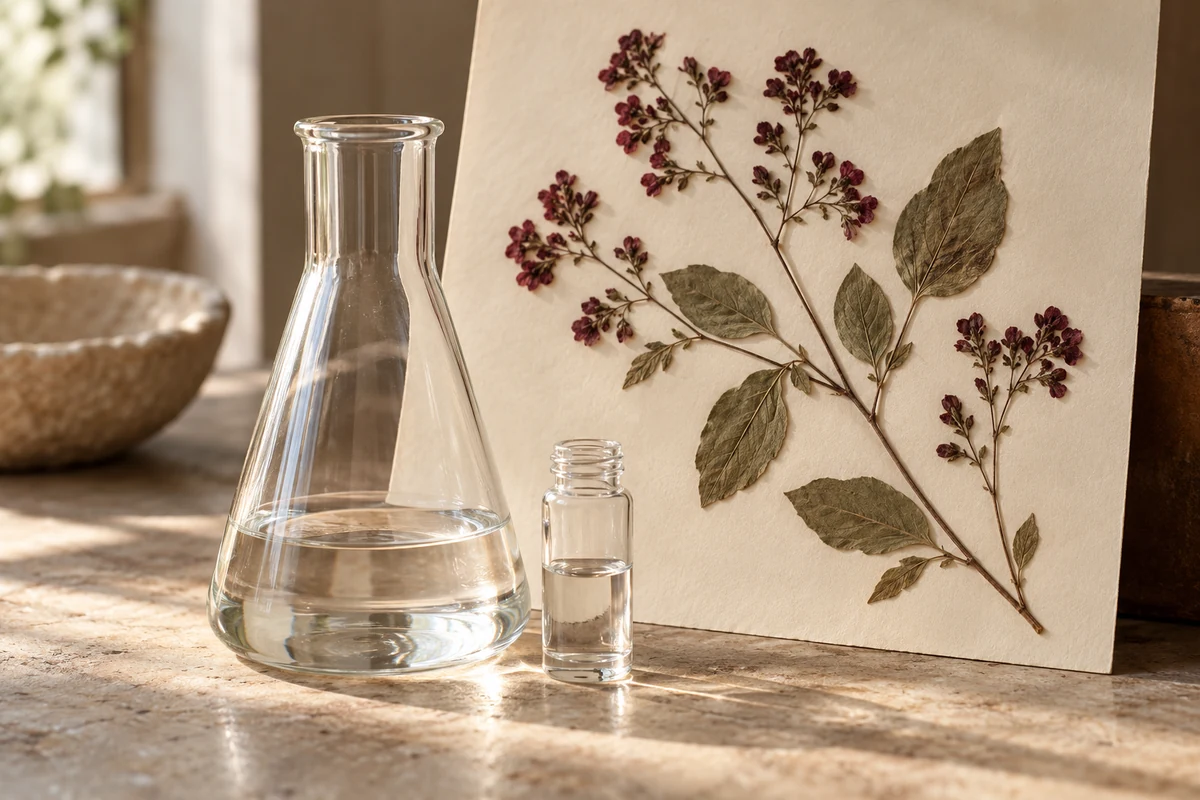
When a plant vanishes from a landscape, more than a botanical species is lost. So is the experience of encountering it: the damp green of a leaf, pollen, woody bitterness, the scent of air around a flower. Digital olfaction technologies propose preserving at least this invisible part.
Osmo, a startup that grew out of Google Brain research, is developing AI tools to analyse and reproduce scents. Speaking about rare plants, the company’s founder Alex Wiltschko described the ability to recreate their aroma as a potential benefit both for nature and for brands. For now, this should be understood as a possibility, rather than an announced programme to save particular species.
How a scent becomes a formula
The approach begins with an analysis of volatile compounds: an instrument records the chemical makeup of the air around a sample, while a model helps connect that set of molecules with an anticipated scent profile. The formula can then be assembled from available ingredients and assessed against the original.
Research by the Osmo team and its academic co-authors has shown that a model can predict odour properties from the structures of individual molecules. Yet a natural scent is always a complex mixture, changing with the time of day, weather, flowering stage and the individual plant itself. The company also acknowledges that some important nuances are difficult to capture and reproduce.
It is therefore more accurate to call the result a reconstruction of a scent impression than an exact copy of a plant. For a perfumer, it is still a valuable opportunity: to study a rare olfactory image, find a substitute for a scarce note, or build a new composition around it.
Why this is not the same as conserving a species
The central objection is simple: a synthetic version of a scent does not protect the place where the original plant grows. It does not restore a population, preserve genetic diversity, or address the causes of its decline.
This gap is especially clear in the case of Aquilaria, the tree from which oud is obtained. Rian Smith of the Royal Botanic Gardens, Kew, notes that AI could help create an alternative to oud, yet that would not automatically erase the market value of wild material. Natural provenance and rarity remain part of the desire to buy the ingredient.
Perfumer and natural-materials researcher Mandy Aftel puts the criticism more sharply: it is premature to call this work conservation if it is not accompanied by protection for plants and their ecosystems. Wiltschko himself has acknowledged that conservation was not an explicit priority in Osmo’s development.
Where the technology has an honest role
A digital scent archive can serve a clear purpose: it can help researchers, museums and perfumers document the olfactory trace of a rare plant without repeatedly taking samples from the wild. It may also indicate which accessible molecules can create a similar impression and where natural materials can be replaced in a formula.
But conservation calls for more: work on habitats, botanical collections, lawful harvesting and demand management. AI can be a tool here, but not a substitute for protecting nature.
For perfumery, this marks an important shift. Instead of trying to obtain ever-rarer material, it may be possible to work more carefully with its scent image. Yet the value of such a reconstruction will depend on whether it genuinely helps reduce pressure on plants, rather than simply making their story more convenient for marketing.
Scents in this story
Mentioned in the story · ULNAY encyclopedia data
 BenefitRing My Bella
ringmybella opens in a clear floral sweep of lily, rose and daisy. Peony and jasmine expand the bouquet without disturbing its fresh, open character, while musk and vanilla soften its edges. Patchouli gives the base a quieter sense of depth, leaving the flowers bright yet gently grounded.
Open in encyclopedia BenefitSo Hooked on Carmella
Rhubarb, lemon and grapefruit bring a brisk, tart opening before tiare flower, cyclamen and peony soften the edges. Vanilla and amber lend sweetness and powdery warmth, while sandalwood gives the drydown a smooth woody line. The result balances brightness with comfort without losing its sense of air.
Open in encyclopedia BenefitLaugh with me Lee Lee
A cool rush of melon and citrus is sharpened by the green nuance of currant leaf and bud. Lily and jasmine bring an airy white-floral presence, with violet adding a softer floral shade. Sandalwood, woody notes and amber lend calm depth without obscuring the fragrance's fresh, lucid character.
Open in encyclopedia BenefitUnder My Spell Noelle
Cardamom and pepper open with aromatic heat, cut by the tart brightness of cranberry. Vanilla softens a floral heart of rose, orchid, violet and jasmine, while oud, patchouli and benzoin deepen the base. Raspberry adds another vivid berry accent to the warm, sweet and shadowed composition.
Open in encyclopedia
Share this story
Discussion
0 commentsComments use your ULNAY account.
Sign in to comment
It is quiet here. Start the conversation.