RIFM in Basel: Why Fragrance Toxicology Needs Context
Safety assessment depends not only on a laboratory finding, but also on how much of a material can actually reach a person. RIFM will bring that connection to the European Teratology Society meeting in Basel.
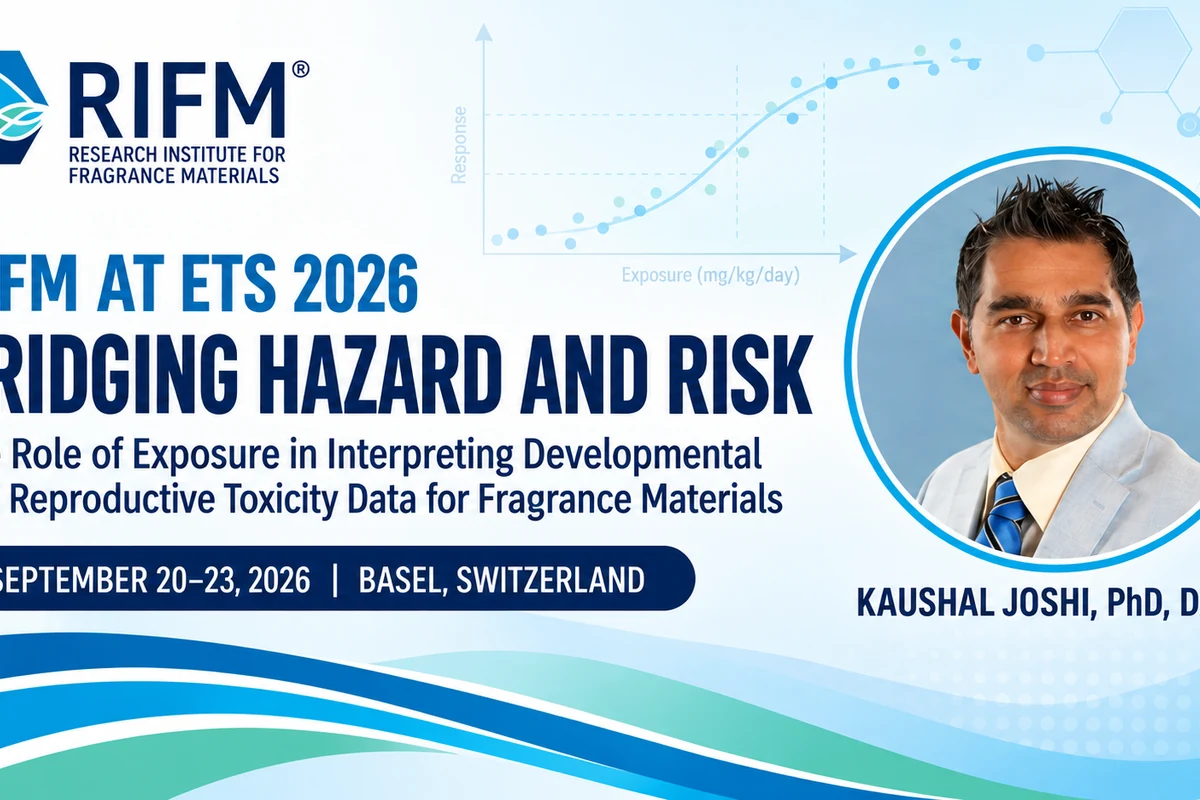
The same figure in a toxicology report can sound alarming or entirely routine—it depends on the dose and route of contact involved. This matters especially for fragrance materials: they are assessed not in isolation, but in the context of their real-world use.
The 54th Annual Meeting of the European Teratology Society will take place in Basel from 20 to 23 September. There, Research Institute for Fragrance Materials Principal Scientist Kaushal Joshi will present a poster on the role of exposure in interpreting developmental and reproductive toxicity data for fragrance materials.
The presentation’s subject is stated plainly: how to connect a material’s hazard with the risk of using it. Hazard describes a substance’s potential to cause an adverse effect under certain conditions. Risk also considers actual exposure—how much of the material a person may receive, how often, and by which route.
For perfumery, this distinction is more than a formality. Fragrance materials appear in products with very different patterns of use: perfume is applied to skin, cosmetics may be rinsed off, while home-care products can remain in the air or on textiles. A conclusion reached without considering exposure therefore does not, by itself, answer the question of risk in a specific product.
RIFM is not announcing a new ingredient or a regulatory change: this is scientific work being presented to a professional audience. Yet the choice of subject points to a broader shift in the discussion around fragrance safety—from an isolated toxicological signal to an assessment of the conditions in which a material is actually used.
For formulators and safety specialists, it is a reminder of a basic principle: research findings must be compared with real exposure, rather than treating the presence of a hazard as an automatic conclusion about risk. For fragrance enthusiasts, it is another reason to approach striking claims about the “toxicity” of individual components with care: here, the context of use changes the meaning of the conversation.

Share this story
Discussion
0 commentsComments use your ULNAY account.
Sign in to comment
It is quiet here. Start the conversation.