A Perfume from a Short Video: How to Test the Recommendation Before You Buy
A short video can make you long for a fragrance you have never smelled. A small sample and a few honest notes can help you decide whether you want the perfume itself—or simply the image created around it.
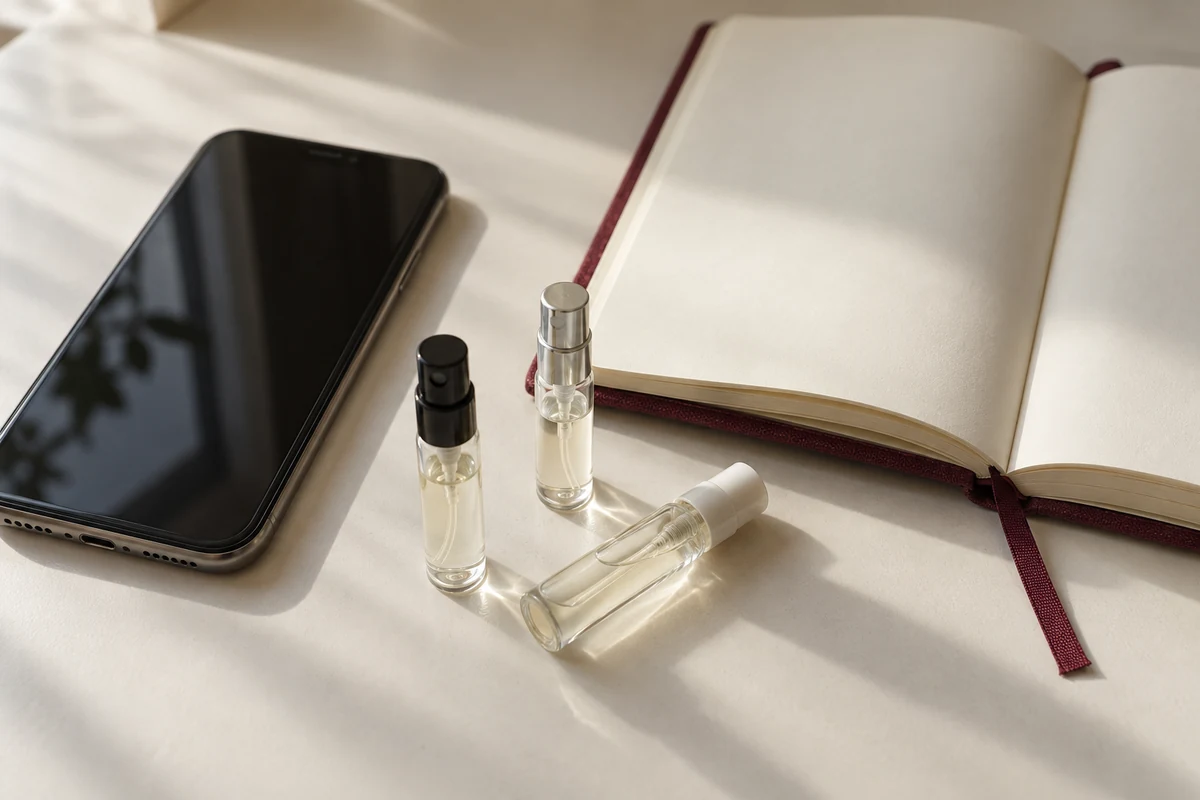
The video ends, and your hand is already reaching for the search bar. The creator promised the scent of clean skin, a luxury hotel or a summer garden, and your imagination filled in the rest. Video has an advantage over fragrance here: it delivers an impression instantly, while perfume needs time.
A sample gives that time back to the buyer. It lets you take the recommendation out of someone else’s frame and into your own life, then see what remains of the promise after an hour, a working day and several encounters.
Before the First Spray: Separate Expectation from Experience
Save a few basic details from the video: the fragrance’s full name, its concentration and the creator’s key words. “Fresh,” “intimate,” “loud,” “smells more expensive than it is”—these descriptions will quietly shape your perception.
Beside them, write down why the recommendation appealed to you personally. Perhaps it was a particular note, a mood or the hope of finding an everyday fragrance. This note will be useful later: it can reveal whether the perfume meets a genuine need or whether you were won over by a persuasive story about it.
It is also worth noticing the context of the video. Was the bottle gifted to the creator? Was the post marked as advertising? Did they offer specific observations about how the composition develops? A commercial relationship does not make an opinion worthless, but it does help you decide how much weight to give it.
After that, set the note pyramid and other reviews aside for a while. Note names and vivid comparisons can influence how people identify and evaluate a scent, so it is more useful to begin the first encounter in your own words.
First Contact: Smell It, Don’t Guess It
A blotter offers an unhurried sense of the fragrance’s direction and helps you check that the opening does not feel sharply unpleasant. But paper cannot show how the composition will feel in motion, against warm clothing or beside the natural scent of your body. If the blotter test goes well and your skin usually tolerates perfume without a reaction, you can try it next on a small area of skin.
Do not try to decipher the entire note pyramid at once. Record one simple first impression: light or dark, dry or juicy, sheer or dense. Then leave the fragrance alone and return to it later—constant sniffing gradually reduces sensitivity to a familiar smell.
Three entries are enough for your journal: shortly after application, about an hour later and toward the end of the wear. Instead of listing notes you think you recognise, describe the change: it became softer, lost its freshness, turned powdery, began to feel tiring or, conversely, gained depth. These observations are easier to compare than striking metaphors.
First Wear: An Ordinary Day, Not a Premiere
Choose a day without a special agenda for your first full wear. A familiar route, your usual clothes and the absence of other noticeable scents create a neutral background. In these conditions, you can notice not only how the perfume develops but also how naturally it fits into everyday life.
Notice the moments when the fragrance draws your attention on its own. Sometimes you want to bring your wrist closer again; sometimes you forget about the perfume, then catch a pleasant trail as you move. It can go another way too: the composition remains beautiful but continually demands patience. For a future purchase, this difference matters more than any resemblance to someone else’s description.
It is better to record longevity without turning it into a contest against the clock. Note when the fragrance is no longer noticeable at a distance and when it remains only close to the skin. If other people can still smell it but you cannot, you may simply have grown accustomed to it, so the opinion of someone close to you can occasionally be more useful than another spray.
Another Wear: Change the Circumstances
One successful encounter can easily depend on your mood, the weather or the thrill of novelty. Try the fragrance again on another day and change the setting slightly: go outdoors instead of staying home, wear a different fabric or choose morning rather than evening. There is no need to stage a fragrance experiment—simply see whether the composition retains its character in real life.
On the second wear, compare your own reactions rather than lists of notes. Did you want to reach for the sample again? Does the fragrance’s volume suit the distance you usually keep from other people? Is it still comfortable after several hours? Any skin irritation or decline in well-being is a reason to stop applying it, not to force yourself to “break in” an unsuccessful purchase.
A third encounter is especially good at separating genuine interest from suggestion. The novelty has faded, the words from the video are less insistent, and the perfume is left almost alone with your taste. This is often when you discover that a captivating composition appeals to you as an idea but has no place in your wardrobe—or that a quiet first impression is gradually becoming an attachment.
How to Read Your Notes
Instead of giving the perfume one overall score, gather four brief observations: what you expected, what you noticed at first, how the fragrance lived through the day and whether you wanted to return to it. A mismatch with the video does not mean that anyone was wrong. Scent perception depends on context, past experience and the individual relationship between a person and a perfume.
Consider separately the role the fragrance has taken on in your life. If it has a clear place and you want to wear the sample without further persuasion, a full bottle may be a sensible purchase. If the composition suits only an occasional mood, a miniature or small decant is likely the better choice. And when most of the pleasure comes from the creator’s story, you can leave the video in your saved posts without turning it into a bottle on your shelf.
A good recommendation opens a door, but it does not have to make the viewer’s decision. A few days with a sample restore a fragrance to its true scale: not fifteen compelling seconds, but hours beside the person who will wear it.
Scents in this story
Mentioned in the story · ULNAY encyclopedia data


Discussion
0 commentsComments use your ULNAY account.
Sign in to comment
It is quiet here. Start the conversation.