Rice and Sesame in Perfumery: Gourmand Notes Beyond Dessert
The new gourmand perfumery smells less like a pastry counter than warm grain, dry nuts and steam—familiar, comforting and not necessarily sweet at all.
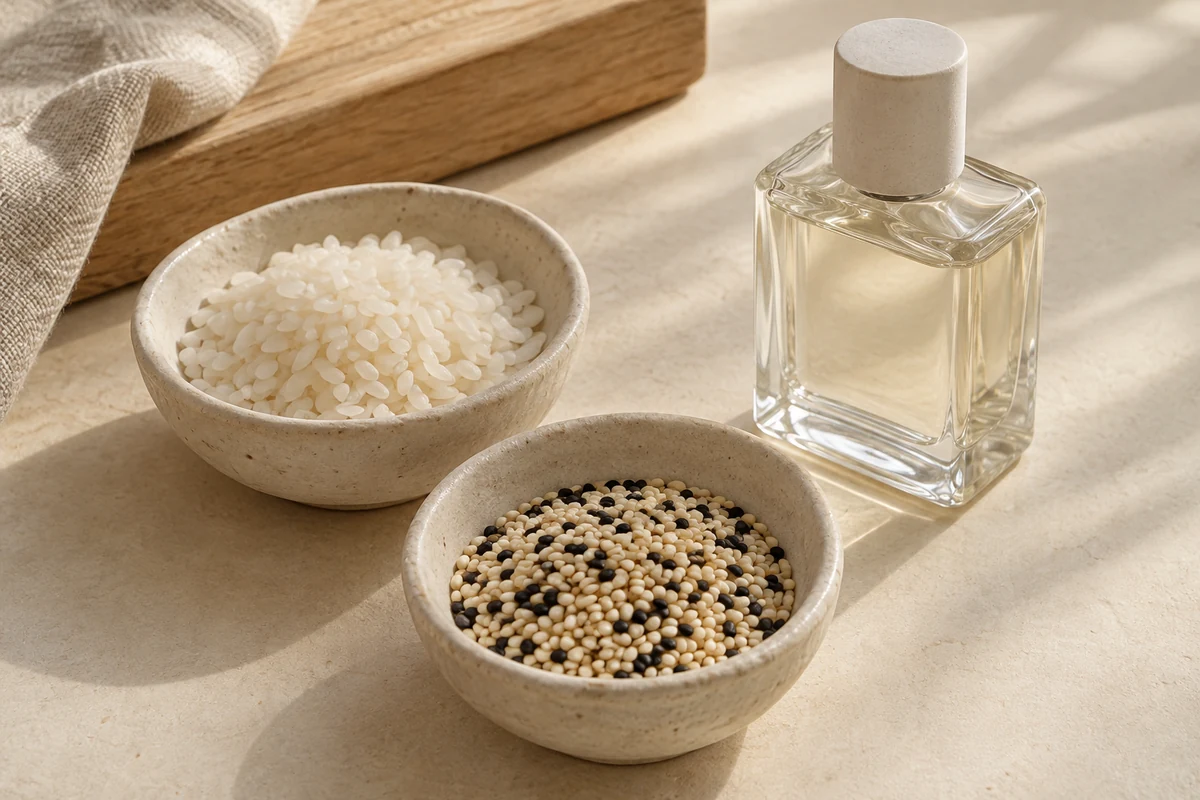
Freshly cooked rice has an almost translucent scent: a little steam, starchy softness and nutty warmth. Sesame behaves differently. Once toasted, it becomes dry, smoky and slightly bitter, as though a tiny kitchen had been captured inside the bottle.
This contrast is precisely what makes grain accords more interesting than yet another variation on vanilla. They retain a recognizably edible character without having to smell like dessert.
Why perfumers turned to grains
In recent years, the gourmand genre has gradually expanded its menu. Alongside caramel and baked goods, tea, coffee, tomato leaf, rice, pandan, nuts and other less overtly sweet themes have emerged. Industry forecasts for 2025–2026 regularly cite rice and sesame as hallmarks of a new, more restrained kind of gourmand perfumery.
These fragrances have an obvious appeal: they evoke tactile, domestic associations while feeling lighter than familiar compositions built around syrup, praline and dense vanilla. Rice brings airiness; sesame adds toasted texture and a subtle piquancy.
What rice really smells like
One of the most important compounds in the aroma of fragrant rice varieties is 2-acetyl-1-pyrroline. Its scent is often described in terms of popcorn, bread crust and roasted nuts. Yet the actual aroma of rice comes from numerous volatile compounds, so its perfumery interpretation may lean toward milky softness, dry wood or warm powder.
In Diptyque’s L’Eau Papier, rice is explicitly described as a steam accord. White musks, mimosa and pale woody nuances evoke not a dish but the sensation of fine paper and humid warmth. Here, the word “rice” names an image assembled by the perfumer.
White Rice by d’Annam offers a different interpretation. Its listed notes place rice alongside pandan, iris, jasmine, tonka bean and white musk. The structure suggests a creamier, nuttier texture, although a note list still should not be read as an exact formula.
How sesame changes
Fresh and toasted seeds smell different. Heating sesame produces more volatile compounds associated with nutty, roasted, smoky and caramel-like nuances. Pyrazines play a particularly prominent role, while phenolic and other compounds also shape its aroma.
A sesame fragrance can therefore recall tahini, a hot pan, coffee beans or a browned crust. The surrounding notes determine which association comes to the fore.
In Kedu by Memo Paris, sesame absolute is paired with grapefruit, citrus, tea, ginger, cedar and white musk. The bitter freshness keeps the sesame well away from the realm of pastries. Tonka Sesame by Experimental Perfume Club is built around sesame absolute, green hazelnut, almond, tonka and cedar—a warmer, nuttier and more distinctly gourmand interpretation.
Comparing them without clues from the bottle
The four compositions are easy to compare on paper blotters: use the same number of sprays, give each fragrance its own blotter, then revisit them after roughly twenty minutes and again after two hours. It helps to cover the names at first—the word “rice” or “sesame” can steer perception all too easily.
Begin by distinguishing textures rather than ingredients. Is there humid steam, dry powder, toasted crust, creaminess or woody bitterness? Then see whether the impression of grain remains after the opening notes fade. Sometimes the promised ingredient is noticeable only at first; elsewhere, it emerges later through musk, tonka or a woody base.
The expected contrast within the rice pair lies between the papery, musky transparency of L’Eau Papier and the creamier, floral-nutty profile of White Rice. Among the sesame fragrances, Kedu occupies the fresh, citrus-green end of the spectrum, while Tonka Sesame is warm and toasted. This is not a ranking: the point is to discover which facet of a grain accord genuinely appeals to you.
A note is not the same as an ingredient
A fragrance pyramid describes the impressions and development of a composition, but it does not reveal the formula. A rice note can be created from a blend of musky, powdery, woody and nutty materials without any rice extract. Conversely, some brands specifically list sesame absolute or sesame seed oil, although these still function within a complex formula.
The ingredient list on the packaging does not solve the puzzle entirely either. The aromatic component is usually identified by the general term parfum or fragrance, followed by individual substances disclosed in accordance with labelling requirements. That list cannot reveal the proportions or predict the scent with confidence.
Rice and sesame have proved such natural extensions of the gourmand theme because they leave room for imagination. They may evoke food, but they are at their best when a perfumer translates a familiar aroma into texture: steam, paper, pale wood, nut dust or the faintest trace of smoke. At that point, the gourmand note stops being a literal dessert and becomes part of one’s personal space.
Scents in this story
Mentioned in the story · ULNAY encyclopedia data


Discussion
0 commentsComments use your ULNAY account.
Sign in to comment
It is quiet here. Start the conversation.