Tea Fragrances for Autumn: Choosing Between Matcha, Oolong and Black Tea
A tea fragrance can offer green freshness, creamy softness or dry astringency. We compare three compositions inspired by matcha, oolong and black tea—and explain why the name of a drink does not guarantee the familiar scent rising from a cup.
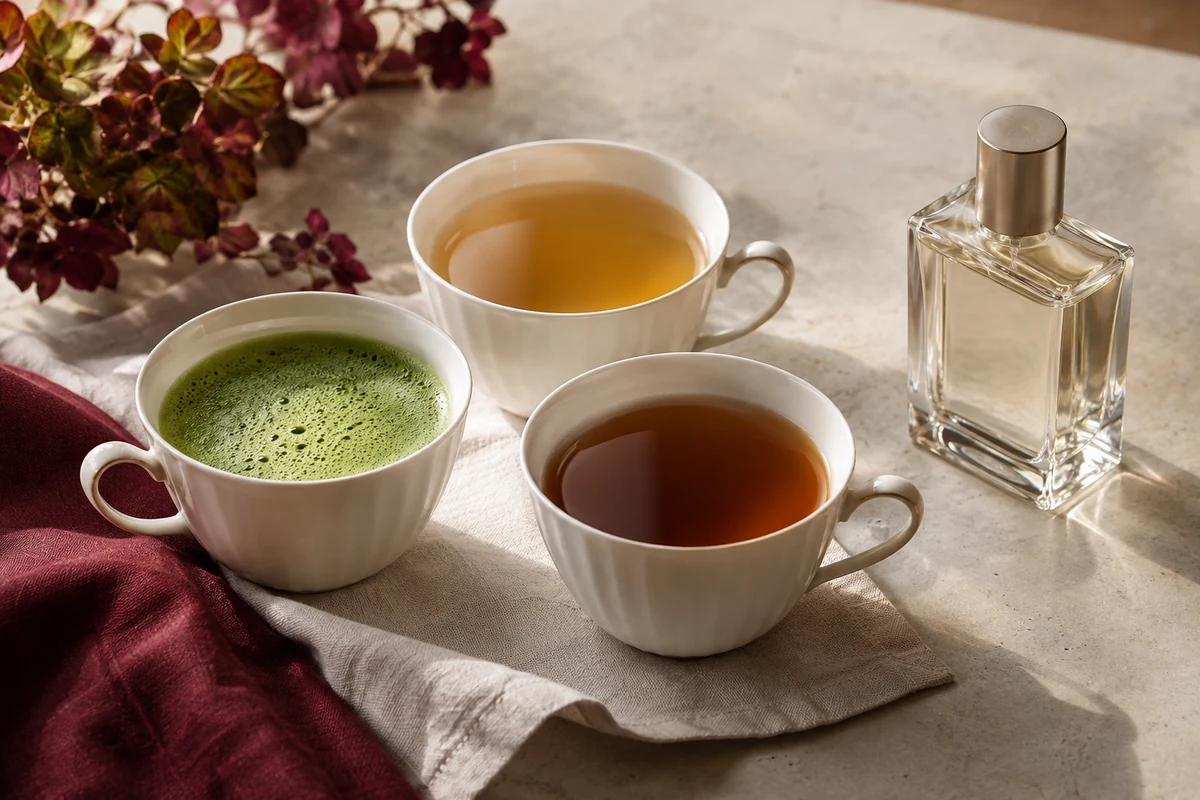
Familiar sensations can make choosing an autumn fragrance easier: cool greenery, creamy softness or dry, woody warmth. The tea theme brings these different moods together, from the bright freshness of matcha to the astringent depth of black tea leaves.
For this comparison, we will look at Le Labo’s THÉ MATCHA 26 and THÉ NOIR 29, with Nishane’s WŪLÓNG CHÁ between them. The brands’ descriptions provide a useful framework for testing, but each fragrance may develop differently on your skin.
Matcha: when softness matters
In THÉ MATCHA 26, Le Labo combines a matcha accord with creamy fig, vetiver, cedar and bitter orange. The brand describes it as a composition intended to be experienced at close range.
Based on that description, it deserves a place on your testing list if tea appeals to you most when softened by fruit and supported by woods. Still, creamy fig is not the same as milk, and the name THÉ MATCHA 26 does not promise an exact recreation of a matcha latte.
On a testing strip, notice what comes forward for you: the suggestion of tea, the rounded fruit note or the woods. If pronounced greenery is your priority, check whether your nose finds enough of it here. For a quiet, personal fragrance, consider whether you enjoy its character up close without trying to predict its trail from the brand’s description.
Oolong: when freshness needs a gentle finish
For WŪLÓNG CHÁ, Nishane lists bergamot, orange, mandarin and litsea cubeba at the opening; oolong tea and nutmeg in the heart; and musks with fig leaf in the base. In the brand’s French description, the tea facet is presented as floral and milky.
This profile is worth exploring if you want to keep some citrus freshness in your autumn fragrance wardrobe. The decisive impression, however, should come from smelling the fragrance yourself.
It is especially helpful to separate the test into two stages. First, take in the citrus opening; then return to the strip and decide whether you enjoy what remains after it. When choosing a tea fragrance, that second impression may matter more than the first.
The word “oolong” should not automatically suggest the scent of roasted leaves. In the official description of this particular composition, the emphasis falls on citrus, floral-milky tea and green fig leaf; no roasted facet is listed.
Black tea: when dryness and astringency appeal
For THÉ NOIR 29, Le Labo lists bergamot, fig and bay leaf alongside cedar, vetiver and musk. According to the brand, black tea leaf extract brings dry, leafy, hay-like and tobacco nuances to the later stages of the fragrance.
Of the three, this is the most natural starting point for someone drawn to dry woods and the character of tea leaves. Its autumnal mood comes from hay and tobacco nuances, although the balance may shift on skin.
While testing it, notice how you respond to the dryness and whether it makes you want to bring your wrist closer again. Then consider the roles of fig and bergamot, and how their brightness sits beside the darker part of the composition.
Dry, tobacco-like and roasted are useful but distinct descriptions. If a roasted quality is what you want, the presence of black tea in the name does not settle the matter. The maker of THÉ NOIR 29 specifies hay-like and tobacco nuances, so any impression of roasted leaves will need to be assessed in person.
How to compare the three
Begin with three labelled testing strips. Before rereading the note lists, write down a few words of your own for each one—perhaps “green,” “soft,” “dry” or “citrusy.” Record separately whether you recognise tea at all. You do not need to detect every listed note to know whether you enjoy the composition.
Return to the strips after about half an hour and compare your notes. This is a useful moment for a second assessment: which fragrance still makes you curious after the initial impression has passed?
Next, wear your favourite on skin during an ordinary day. Revisit it after some time and again toward evening, considering whether the intensity feels comfortable, whether you enjoy the scent that remains and whether you would want to wear it again. Give the next candidate a different day so that each fragrance leaves a distinct impression.
A simple route through the three is to begin with THÉ MATCHA 26 for a tea accord surrounded by creamy fig; WŪLÓNG CHÁ for a citrus opening and a floral-milky interpretation of oolong; or THÉ NOIR 29 for tea’s dry, leafy and tobacco-like side. These pointers follow the manufacturers’ descriptions, but your own testing will determine the preference.
An autumn fragrance does not have to be the richest or most substantial one. Choose the scent you enjoy returning to during an ordinary day—between work meetings, on a walk or at home with your own cup of tea.
Scents in this story
Mentioned in the story · ULNAY encyclopedia data
 NishaneAni Nishane
Ginger, bergamot, pink pepper and green notes give Ani Nishane an energetic, spicy opening. Cardamom, black currant and Turkish rose deepen the centre before vanilla, benzoin, sandalwood, cedar, patchouli, ambergris and musk create an expansive woody base.
Open in encyclopedia NishaneHundred Silent Ways
Tuberose, peach and mandarin orange introduce Hundred Silent Ways with floral richness and soft fruit. Gardenia, jasmine and orris create a creamy, powdery centre, while vanilla, sandalwood and vetiver shape a smooth base with a drier woody undertone.
Open in encyclopedia NishaneTuberoza
Ylang-ylang, orange blossom, artemisia and sweet orange set up a warm floral opening with a bitter-green edge. Tuberose, gardenia, jasmine and marigold fill the heart, while vetiver, musk, amber and sandalwood provide a grounded, lasting base.
Open in encyclopedia NishanePatchuli Kozha
Chamomile, artemisia, ylang-ylang and hyacinth give Patchuli Kozha a complex herbal-floral opening. Patchouli and black pepper make the centre darker and drier; honey, incense and leather then form a smoky, warm and uncompromising base.
Open in encyclopedia
Discussion
0 commentsComments use your ULNAY account.
Sign in to comment
It is quiet here. Start the conversation.