Why heavy rain gives petrichor less of a chance
That earthy smell after rain does not come from water alone. It needs dry soil, the right first drops, and enough time for fragrant compounds to build up.
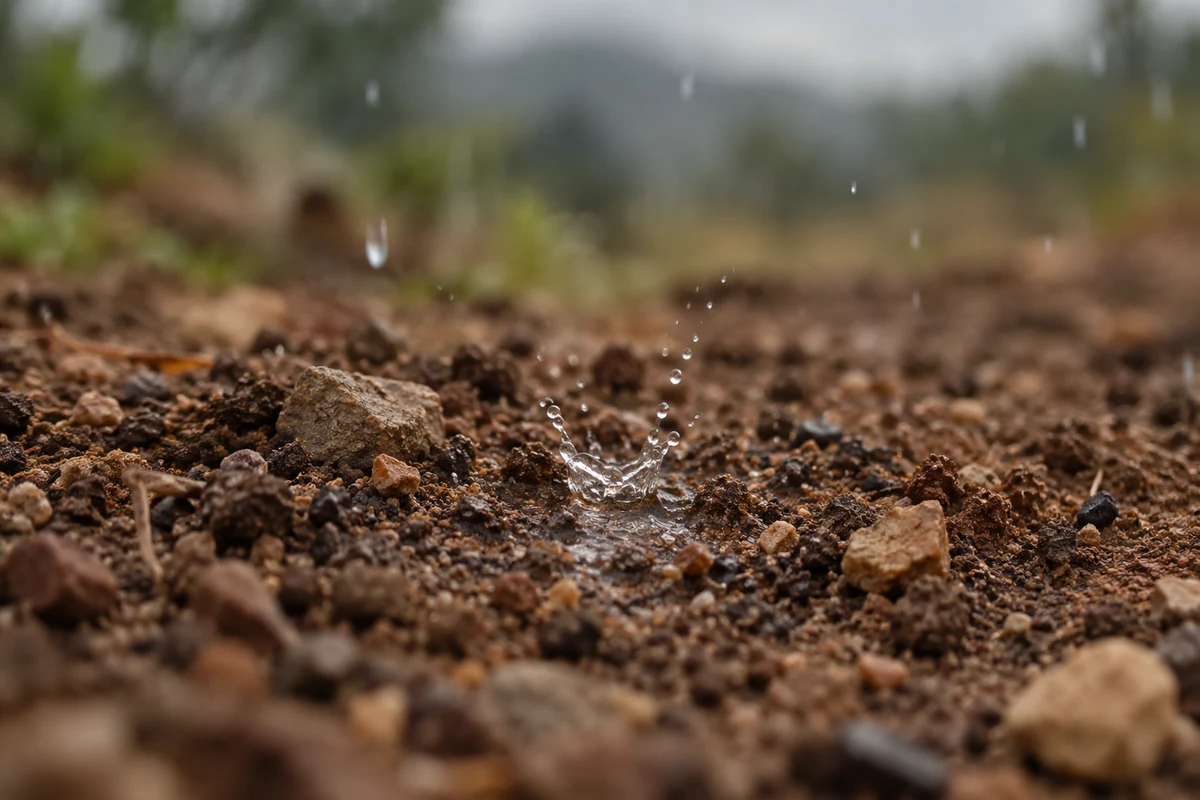
When the first drops hit dry ground, air in the soil’s pores is caught by the water, rises in bubbles, and releases tiny aerosol droplets into the air. Volatile compounds from soil and plants can travel with them, creating the familiar post-rain scent known as petrichor.
This effect has its own rhythm. A study published in Global Change Biology in October shows that rewetting dry soils produces a particularly noticeable initial release of volatile organic compounds. Their composition and intensity are linked, among other things, to soil dryness and its microbial community.
That is why the interval between rains matters. When precipitation is frequent, the soil has less time to remain dry, and the compounds we associate with petrichor have less opportunity to accumulate. The scent after the next rain may be quieter, or simply different.
The force of the rain also changes the scene. Laboratory experiments with droplets on porous surfaces have shown that light and moderate rain create more aerosols, while heavy rain creates markedly fewer. A fast flow of water washes compounds away, while the conditions for bubbles to form and burst also change.
This does not mean that every downpour is scentless. Soil type, temperature, vegetation, wind, the urban environment, and the length of the preceding dry spell all shape what we perceive. But the familiar idea of the “smell of rain” is more accurately understood as a brief encounter between dry earth and the first drops, rather than a fixed quality of any wet weather.
For perfumery, that distinction is especially intriguing. An accord of wet stone, earth, or air after a storm usually evokes the memory of just such a moment: moisture alongside dust, minerals, greenery, and air. Real petrichor does not have to smell the same every time—and that is precisely what makes it so difficult, and so compelling, to translate into a bottle.

Share this story
Discussion
0 commentsComments use your ULNAY account.
Sign in to comment
It is quiet here. Start the conversation.